

Technology R&D
Disease Animal Models
▲Introduction / Features
【Customized Animal Experiments】
Animal models refer to biological and behavioral research conducted on animals, as well as congenital or induced pathological changes observed in animals that show similar phenomena in humans or other animal species, serving as references for research.
In general, these models mainly focus on human diseases and are referred to as human disease animal models. Such models utilize certain animals to produce responses similar to specific human diseases.
- Joint Degeneration: Collagenase is injected into the hind limb joints of mice to induce joint degeneration.
- Fatty Liver: A high-fat diet is used to induce fatty liver in animals. Serum biochemical values and histopathological sections are analyzed.
- Sarcopenia: Induced by joint immobilization or Dexamethasone. Muscle endurance, grip strength, hind limb skeletal muscle weight, and muscle bundle area from histological staining are measured.
- Antidepressant: Tail suspension or forced swimming tests are used to induce depression-like behavior in animals.
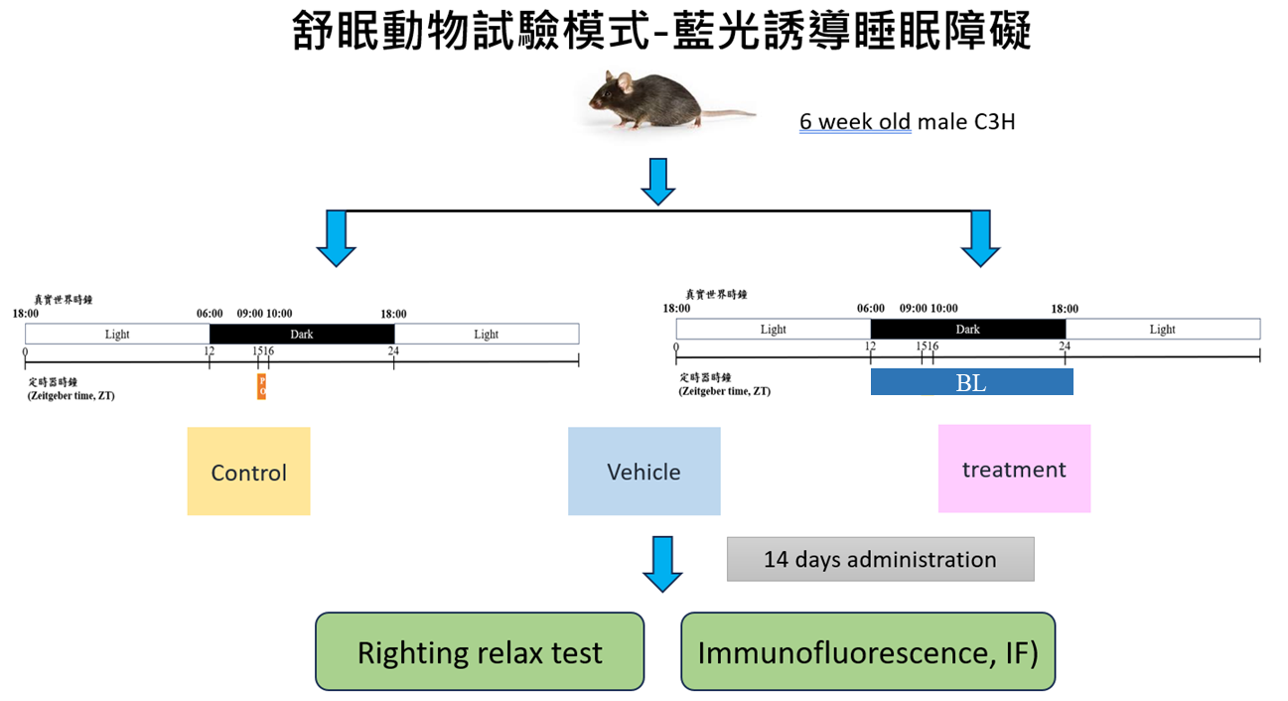
- Sleep Improvement: Blue light or caffeine is used to induce insomnia in animals, evaluated by righting reflex test or open field test.
- IBD (Inflammatory Bowel Disease): DSS (dextran sulfate sodium salt) is provided in drinking water to induce intestinal inflammation and ulcers. Fecal blood testing, intestinal length measurement, and histopathological analysis are performed.
- Gout: MSU is subcutaneously injected into the animal’s paw, and swelling is measured by photographic assessment.
- Pressure Ulcer: Magnets are used to clamp the dorsal skin to induce wounds. Wound area is photographed and histopathological analysis is performed.
- Hair Follicle Proliferation: DHT (dihydrotestosterone) is used as a control group to inhibit hair follicle proliferation. Minoxidil, a common ingredient in commercial hair growth products, is used to evaluate the sample’s effect on promoting hair follicle regeneration.
- Wound Healing: Holes are created in the animal epidermis, and wound recovery speed is evaluated after topical treatment.
Focusing on pharmaceuticals and medical devices, supplemented by health foods and medicated cosmetics, promoting technology development and services, dedicated to the development and internationalization of the pharmaceutical industry, enhancing industry competitiveness!
Contact Information
 Customer Service Phone : 02-6625-1166
  Customer Service Email : pitdc_p@pitdc.org.tw
  Company Address : 7th Floor, No. 9, Wuquan Rd., Wugu District, New Taipei City, 248
  Line Official Account :
 Copyright © 2026 Medical and Pharmaceutical Industry Technology and Development Center All Rights Reserved.